
How to Prevent Frizz: The Post-Shower Step That Changes Everything
If you've ever stepped out of the shower and watched your hair decide to do something completely different from what you planned, you're familiar with frizz. You're also probably familiar with the solutions everyone offers: leave-in conditioner, a diffuser, the right serum. While those things help, they often don't fix the root cause. Because the problem usually starts before you apply a single product.
The step most people overlook is the one that happens immediately after the water turns off.
What Frizz Actually Is
Frizz isn't a hair type. It's a condition. One that happens when the outer layer of the hair shaft, called the cuticle, is disrupted and individual strands start absorbing moisture from the air unevenly.
When your cuticle is smooth and intact, hair lies flat, light reflects uniformly, and strands behave as a cohesive unit. When your cuticle is lifted or damaged, even slightly, individual strands stand away from the shaft, catch ambient humidity, and swell at different rates. That's frizz.
The cuticle can be disrupted by heat, chemical processing, hard water, or something far more common: friction from a rough surface when your hair is wet.
The Post-Shower Window
The most critical moment for your hair's behavior starts the second the water turns off. Your hair has just been saturated. The cuticle is open. The shaft is swollen and soft. Everything that touches your hair in this state, and how it touches it, sets the stage for how your hair will look when it's dry.
What most people do: grab a terry cloth towel and rub vigorously, either to speed up drying or out of habit. What that motion does: drags the rough looped cotton surface across lifted cuticle scales, disrupting them further. The friction creates static, roughens the shaft, and distributes moisture unevenly throughout the hair. By the time you start styling, you're already working against your hair.
Step One: Change What You're Drying With
A microfiber towel is not just a softer towel. It's a different kind of tool. Microfiber filaments are a fraction of the diameter of a human hair, creating a surface area that draws moisture through capillary action rather than absorbing it through friction. The water moves into the towel. You don't have to rub it in.
This distinction matters for frizz in a specific way: because moisture is drawn away without mechanical rubbing, the cuticle is disturbed far less during the drying process. The result is smoother hair as a starting point, before you've applied anything.
Step Two: Change How You're Drying
Technique matters as much as material. The goal is to reduce directional friction, moving away from the back-and-forth rubbing motion and toward gentle compression.
After showering:
- Gently squeeze excess water from lengths and ends before towel contact.
- Lay your hair on the opened towel, fold the towel over, and gently press. Don't rub.
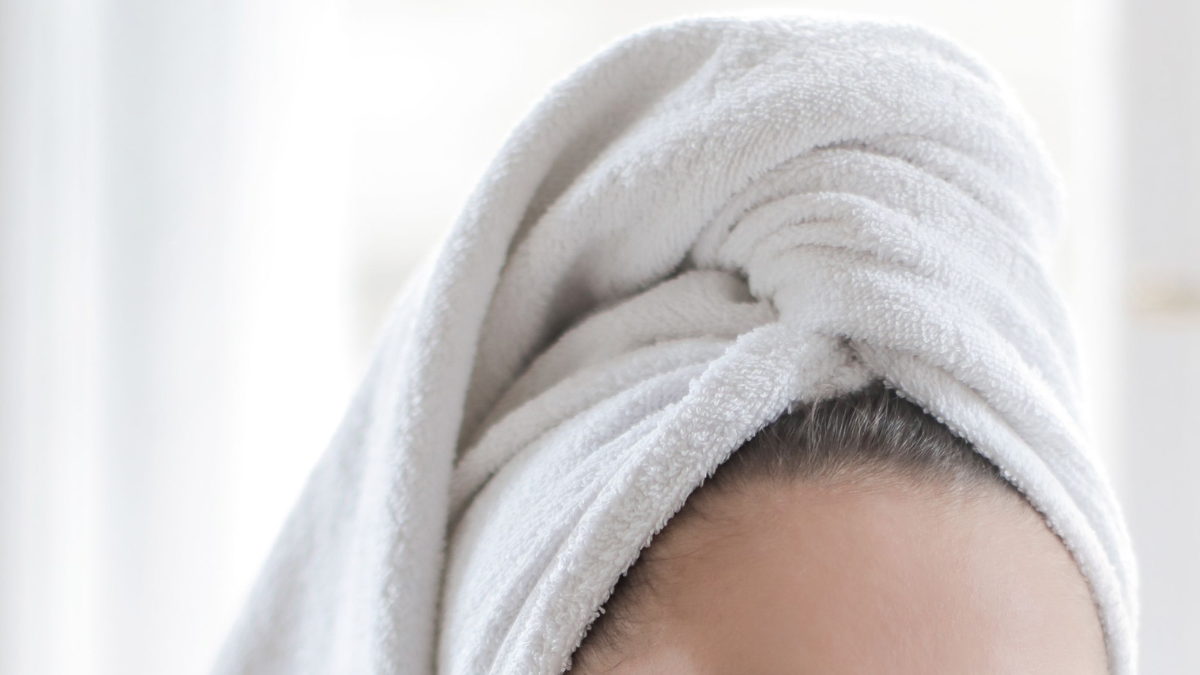
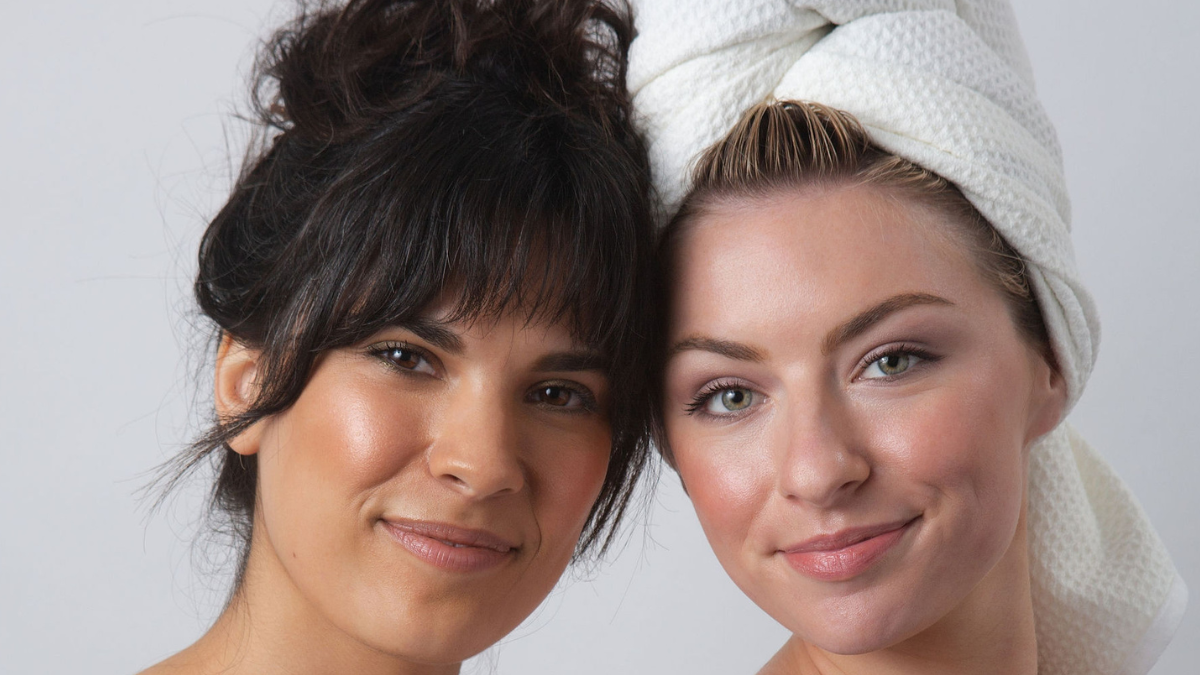
- For longer hair, bring the towel up and let the hair rest in a loose wrap while you finish your post-shower routine. The microfiber continues drawing moisture without any effort.
- When you remove the towel, your hair should be damp, not dripping, not bone dry. This is the ideal starting point for any leave-in product, styling cream, or diffusing.
Step Three: The Order of Your Products
Applying leave-in conditioner or styling products to completely saturated hair dilutes them. Applying them to hair that's been aggressively towel-dried means you're applying them to already-roughed-up strands. The sweet spot, damp, not dripping, is where products absorb most effectively and where the cuticle is partially sealed and receptive.
This is particularly true for:
- Anti-frizz serums, which work by coating the cuticle to prevent moisture ingress
- Leave-in conditioners, which work by penetrating the shaft, are more effective when hair is damp but not saturated
- Heat protectants, which form a barrier that requires even distribution to work effectively
What About Humidity?
Humidity frizz is a separate challenge, and one that no towel can fully solve. But hair that has maintained better cuticle integrity is inherently more resistant to humidity. An intact cuticle presents fewer entry points for atmospheric moisture to disrupt the strand.
Reducing daily friction during your drying routine builds some degree of natural frizz resistance over time. It doesn't happen overnight, but healthy, intact cuticles behave better in every environment.
The Compounding Effect
Most hair damage is incremental. A rough towel every day, a hot styling tool, an elastic pulled carelessly, none of these creates a visible problem on their own. But together, over months and years, they accumulate into the kind of hair that feels perpetually unruly.
The reverse is also true. Small, consistent improvements compound. Switching to microfiber is one of the smallest possible changes in a hair routine. It requires no extra time, no new products, and no learning curve. Applied daily, it represents hundreds of fewer friction events against your cuticle over the course of a year.
That's how you prevent frizz, not with a better serum, but by starting with better conditions.
GWEN Hair Towel
The GWEN Hair Towel is a professional-grade microfiber hair towel made in Korea, designed to give your hair the gentlest possible start after every shower. It measures 30x35in for a full, secure wrap, and its soft suede-woven edge finishes every detail at the same level as the towel itself.
Available in Ivory, Linen, Sage, and Moss.
Your hair, covered.