
The 5-Minute Post-Shower Hair Care Routine That Changes Everything
Most conversations about hair care focus on what you put in: which shampoo, which conditioner, which treatment. But the step that happens between washing and styling, the two to five minutes right after you turn off the water, may matter more to your hair's health than any single product in your bathroom.
This is the post-shower window. And it's where most routines quietly fall apart.
Why the Post-Shower Window Is Different
Freshly washed hair is in a unique state: the cuticle is open, the shaft is saturated, and the hair is at its most vulnerable to mechanical damage. It's also, paradoxically, the most receptive to treatment. Products absorb more deeply and distribute more evenly when hair is wet.
The decisions you make in this window, what you touch your hair with, how you handle it, what you apply and when, compound with every wash. Daily habits accumulate. Small disruptions, repeated hundreds of times a year, show up as the kind of hair that feels perpetually difficult: frizzy, brittle, resistant to any styling effort you throw at it.
The good news: the fix doesn't take longer. It just takes a slightly different sequence.
Step 1: Finish With a Cool Rinse (Optional but Worth It)
This is optional, but worth noting: the temperature of your final rinse affects how smoothly your cuticle lies when you exit the shower. Hot water holds the cuticle open; cool water encourages it to close. A brief cool rinse at the end, even just 10-15 seconds, helps seal the cuticle and reduces frizz before your hair ever meets a towel.
Step 2: Gently Squeeze Before You Reach for the Towel
Before the towel makes contact, squeeze, don't wring, excess water from your hair with your hands. Work from roots to ends. This removes the bulk of the water and means your towel is doing less work, which translates directly into less friction and less time.
Step 3: The Right Towel, Used the Right Way
This is the most important step in the sequence. What you dry your hair with, and how you dry it, determines the condition of your cuticle for everything that follows.
Cotton terry cloth towels are excellent for your body. For your hair, the looped surface creates friction against wet cuticle scales, and wet hair is significantly more fragile than dry hair. Rubbing creates micro-tears, static, and frizz that no styling product can fully reverse.
Microfiber removes water differently: through capillary action, which draws moisture away from the hair without requiring directional rubbing. A smooth microfiber surface means the cuticle isn't being disrupted as the water is removed.
The technique:
- Press and squeeze gently from mid-lengths to ends, no rubbing.
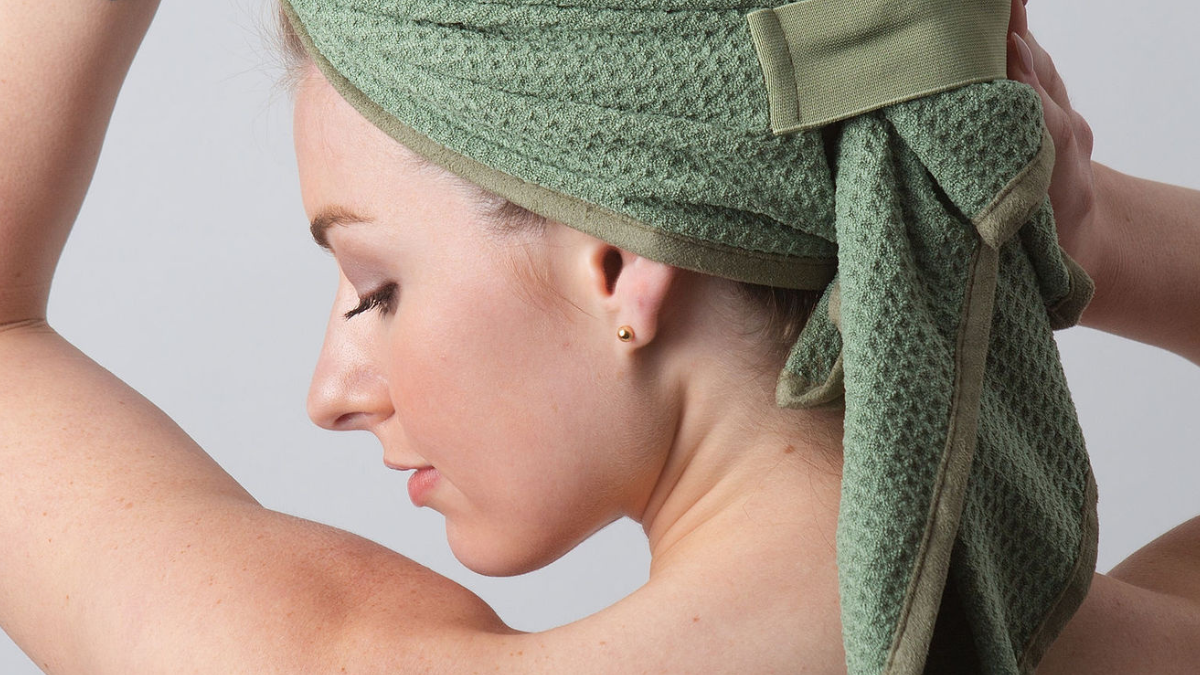
- Wrap and secure, and let the towel continue working while you complete other post-shower tasks.
- Target damp, not dry. Hair should feel damp when the towel comes off, not bone dry.
Step 4: Apply Leave-In or Treatment Products While Hair Is Still Damp
Hair that is damp, not dripping, not almost dry, is in the ideal state for product application. The cuticle is still somewhat open, which allows active ingredients to penetrate. The water remaining in the shaft helps distribute products evenly from root to tip.
What to apply and when:
- Leave-in conditioner: on damp hair, focused on mid-lengths and ends
- Curl cream or styling products: on damp hair, before any diffusing or air drying
- Heat protectant: on damp hair, before any blow drying
- Scalp treatment or hair oil: scalp serums are most effective on a clean, damp scalp; oils are best applied to dry ends after styling
Step 5: The Decision Point: Air Dry or Heat
How you finish drying matters, but less than how you start. Heat styling itself isn't inherently damaging. The problem is heat applied to hair that has already been compromised by friction during the towel step. Hair that started the drying process with minimal cuticle disruption responds better to heat, takes styling more evenly, and holds the result longer.
If you're air drying: once you've removed the towel, avoid touching your hair until it's mostly dry. Every time you run fingers through partially dry hair, you're disrupting the cuticle. For curly or wavy hair, scrunching gently is fine.
If you're blow drying: always use a heat protectant, and consider finishing with a cool shot to help close the cuticle before your hair fully sets.
The Full Sequence
- Cool rinse: 15 seconds (optional)
- Squeeze excess water gently with hands: 30 seconds
- Press-dry with microfiber towel, then wrap: 10-15 minutes
- Apply leave-in conditioner or styling products to damp hair: 1-2 minutes
- Air dry, or blow dry with heat protectant
That's it. Nothing radical. No extra time, no extra products, no particular expertise required.
Why This Matters More Than You Think
The cumulative impact of better post-shower habits is hard to see week to week, but it's real. Reduced friction means less cuticle disruption means smoother hair that behaves more predictably. Better product timing means your leave-in conditioner, your curl cream, your serum (all of those things you're spending money on) actually work the way they're supposed to.
The post-shower window is small. But it's where the compounding starts.
GWEN Hair Towel
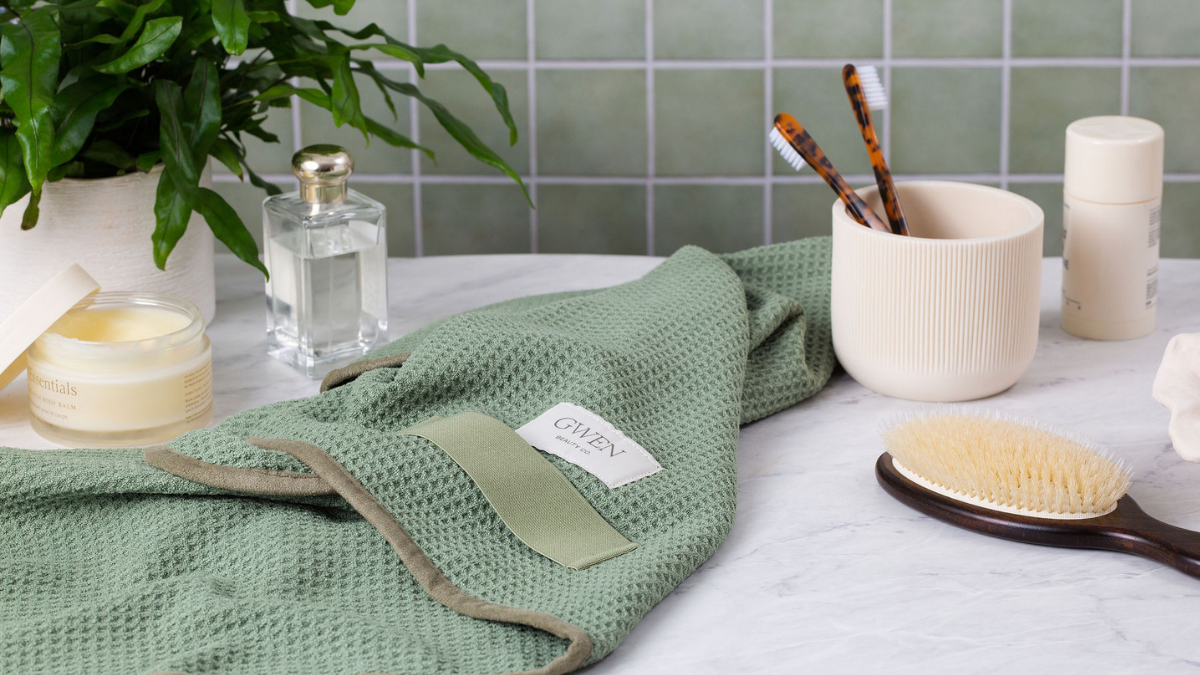
The GWEN Hair Towel is a professional-grade microfiber hair towel made in Korea, designed for the post-shower step your hair actually deserves. At 30x35in with a soft suede-woven edge, it wraps fully, stays in place, and moves your hair from saturated to damp, gently.
Available in Ivory, Linen, Sage, and Moss.
Your hair, covered.